

Geforce 2 Series Review
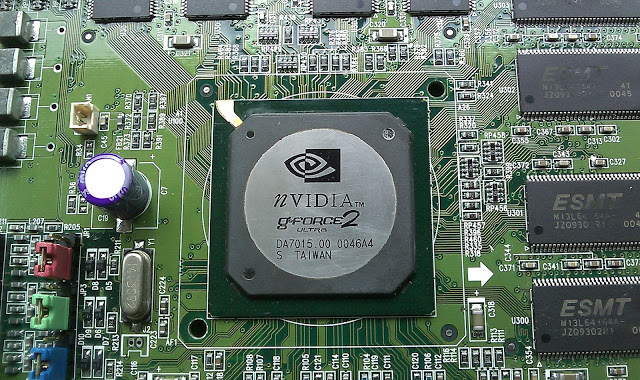
The whirlwind of item discharges from NVIDIA has kept the vast majority of the contending designs organizations moving with the punches while it was preparing up yet another careful strike, the GeForce2 MX. This item may appear to be innocuous at first look as it’s solitary a minimal effort purchaser arrangement however don’t let that trick you. What you should acknowledge is that NVIDIA isn’t simply utilizing this GeForce2 subordinate as a cheap chip that will fill in for the destined to be wiped out TNT2 family yet in addition have this bit of equipment assume control over this fragment of the market by setting new execution principles for minimal effort arrangements and over this, infuse the standard with a GPU that is T&L prepared. The unavoidable issue is: Does it really execute and in addition NVIDIA claims? Outfitted with my reference GeForce2 MX and 5.30 Detonator drivers, I’m prepared to discover.
Before we move into additionally insight about the GeForce2 MX, how about we take a look at NVIDIA’s new product offering up for a superior comprehension of the 10,000 foot view. NVIDIA has officially settled a solid lead with the GeForce2 GTS line of items since its discharge 2 months back (see Tom’s Interpretation of NVIDIA’s New GeForce2 GTS ). The GeForce GTS holds the top of the line position and will supplant the GeForce line of items. In spite of the fact that it had this fragment, it cleared out a central issue check for whatever is left of the market that covers a greater part of the buyers. The TNT2 was appointed to cover this zone however it didn’t really command like its huge sibling the GeForce2 and left a colossal undiscovered asset open. This is the place the GeForce2 MX will become possibly the most important factor. It replaces the TNT2 group of items as the standard arrangement. The chipset has different arrangement alternatives that enable makers to center around a few key regions that will go from a to a great degree minimal effort load up to a mid-go media offering and conceivably portable items. We should start our point by point examination of this promising chipset.
The Chip :
The GeForce2 (MX remaining for Multi-transmitter) chip depends on the GeForce2 GTS however changed for adaptability, cost and standard buyer needs.It depends on the same .18 micron innovation that the GeForce2 GTS is however timed slower and has some structural contrasts. These distinctions help cut power utilization and cost however in the meantime detract from the execution of the GPU. In the event that you investigate both rendering motors, you’ll quickly observe a major contrast between the two. To start with, how about we take a gander at the GeForce2 GTS.
As you definitely know, the GF2 GTS has four rendering pipelines that contain two finishing units each and join for an intense rendering motor. These chips are timed at 200 MHz and in principle are capable accomplish a 800 Mpixels/sec or 1.6 Gtexels/sec.
Above all else, this GPU does without a doubt have completely practical equipment T&L and will be the primary standard chip to have it. The T&L unit is a similar unit in the GeForce2 GTS however running at a slower speed. Investigating the GeForce2 MX rendering motor, you’ll see that is has just two channels. Both are as yet equipped for applying two texels per check yet at last its effectively half as productive as the GeForce2 GTS. To finish that off, the GeForce2 MX chips will likewise be timed at 175 MHz contrasted with the 200 MHz of the GeForce2 GTS. The chip does anyway hold a few of the important highlights of the GeForce2 GTS like 4X AGP, the NVIDIA Shading Rasterizer (NSR) and Superior quality Video Processor (HDVP). It was noticed that the GeForce2 MX HDVP is marginally second rate compared to that of the GeForce2 GTS, as it doesn’t cover a portion of the higher end groups.
From here things can change as the GeForce2 MX will be accessible in two or three memory designs. The memory interface can extend from 64 bit to 128 piece contingent upon the makers needs and SDR or DDR memory can be utilized. Casing support sizes can differ somewhere in the range of 8 and 64 MBs however 32 MB setups will presumably be generally normal.
Costs clearly will drop if the limited 64 bit SDR memory is utilized yet it additionally significantly harms execution. Be that as it may, NVIDIA revealed to us that the 64 bit memory design ought to naturally be outfitted with DDR SDRAM, which will adjust the smaller information way with a higher memory clock. Our reference load up depends on 128 piece SDRAM timed at 166 MHz (giving us a hypothetical breaking point of 2.7 GB/sec) so we can just envision how awful the execution can get if a 64 bit SDR design ought to be utilized.
What Will Be New?
Two or three highlights were added to focus on the requirements of standard clients and give extra an incentive over the elite illustrations motor. I’m alluding to TwinView and Advanced Vibrance Control.
TwinView is like the DualHead idea from Matrox in that it enables clients to have various yield gadgets immediately. You can have different blends between a CRT, Computerized Level Board (DFP) and television out. The main constraint that I saw was that you can’t do double television yield. The fundamental distinguishing strength that NVIDIA brags over Matrox is that they claim to have the capacity to drive two advanced shows at the same time because of a Double Connection Transmission-Limiting Differential Flagging transmitter or TMDS. Remember that this component is as yet restricted by the sort of yields that the given sheets has. On the off chance that you don’t have a DFP connector on your board or a television out, you can’t in any way, shape or form utilize them. This is presumably a warm welcome to the individuals who really require a double yield designs card, as the G400 arrangement from Matrox are pleasant cards however don’t really meet everybody’s 3D execution norms.
Above are a few cases of the TwinView designs.
Computerized Vibrance Control enables the client to carefully control the immersion of pictures. This element was included with the goal that clients can modify the shading immersion like the controls of your TV. I’m not by any means persuaded that this element includes substantially finished the standard gamma controls that we’re utilized to, however this component may prove to be useful for adjusting visuals on Level Boards.
 TechExpertHub